Institution: Vanderbilt UMC
Additional authors:Claudio Mosse, Keith Shults, Annette Kim, Robert Briggs, Sara McClintock-Treep
Session: AML with myelodysplasia-related changes
HISTORY
A 77 year old male with multiple medical problems (type 2 diabetes, hypertension, prostate cancer) presented with normocytic normochromic anemia, with normal WBC and platelet counts. After initial diagnosis he received supportive care alone, had persistence of transfusion-dependant anemia, but experienced no disease progression. The patient died 4.5 years later of unrelated causes.
DETAILS
Initial and 3 subsequent posterior iliac crest bone marrow aspirates/biopsies (initial processed in formalin, subsequent 3 in B5) showed similar features: hypercellularity, variable M:E ratios, erythroid dysplasia (megaloblastoid change, some nuclear dysplasia, some vacuolization of immature precursors), variable absent to mild megakaryocytic dysplasia, absent granulocytic dysplasia, no increase in blasts, with increased storage iron and numerous ring sideroblasts.
IMMUNOHISTOCHEMISTRY AND FLOW CYTOMETRY
Flow cytometric studies using antibodies against CD45, CD33, CD19, CD34,CD117, CD16, CD11b, HLA-DR revealed no abnormal blast population. Special flow cytometric studies performed for research purposes showed minimal loss of MNDA (myeloid nuclear differentiation antigen) expression in myeloid cells.
CYTOGENETIC FINDINGS
Karyotype: 46,XY [20]
MOLECULAR FINDINGS
INTERESTING FEATURES
This is a morphologically standard case of refractory anemia with ring sideroblasts (RARS) that was non-progressive, remaining stable for 4 1/2 years and dying of unrelated causes. Some cases of RARS follow this course, with clinically significant but stable anemia. These cases have a low or absent rate of progression to AML, and thus appear to differ fundamentally from most MDS, which tends to be progressive to death either due to progressive MDS or progression to AML. Many cases of MDS with ring sideroblasts, including cases fitting the diagnostic criteria for RARS, follow this aggressive course. It would seem important to distinguish these entities, since stable RARS requires supportive care, while progressive MDS cases with ringed sideroblasts require more aggressive approaches to treatment. We have recently reported (Am J Clin Pathol 2011;135:380-385) that flow cytometric analysis of loss of MNDA in myeloid cells is an excellent marker of MDS, with near perfect separation of MDS cases from normal controls (area under ROC curve = 0.96, p = 9x10[e-7]). This work has been corroborated by others (Cytometry B Clin Cytom. 2012 Sep;82(5):295-304). Of particular interest, the current case is the single case of MDS that fell in the normal population in our study (0.7% loss of MNDA expression in myeloids, while the median for remaining cases of MDS was 67.4%, range 8.4-97.5%). These data suggest that MNDA testing may be both an effective single flow cytometric tool for the diagnosis of aggressive MDS, and a tool for separation of these aggressive cases from potentially non-progressive MDS.
PROPOSED DIAGNOSIS
Refractory Anemia with Ring Sideroblasts, non-progressive variant
CONSENSUS DIAGNOSIS
Refractory anemia with ring sideroblasts, non-progressive variant
| Bone marrow aspirate, low power, WG stain, showing hypercellular particles | 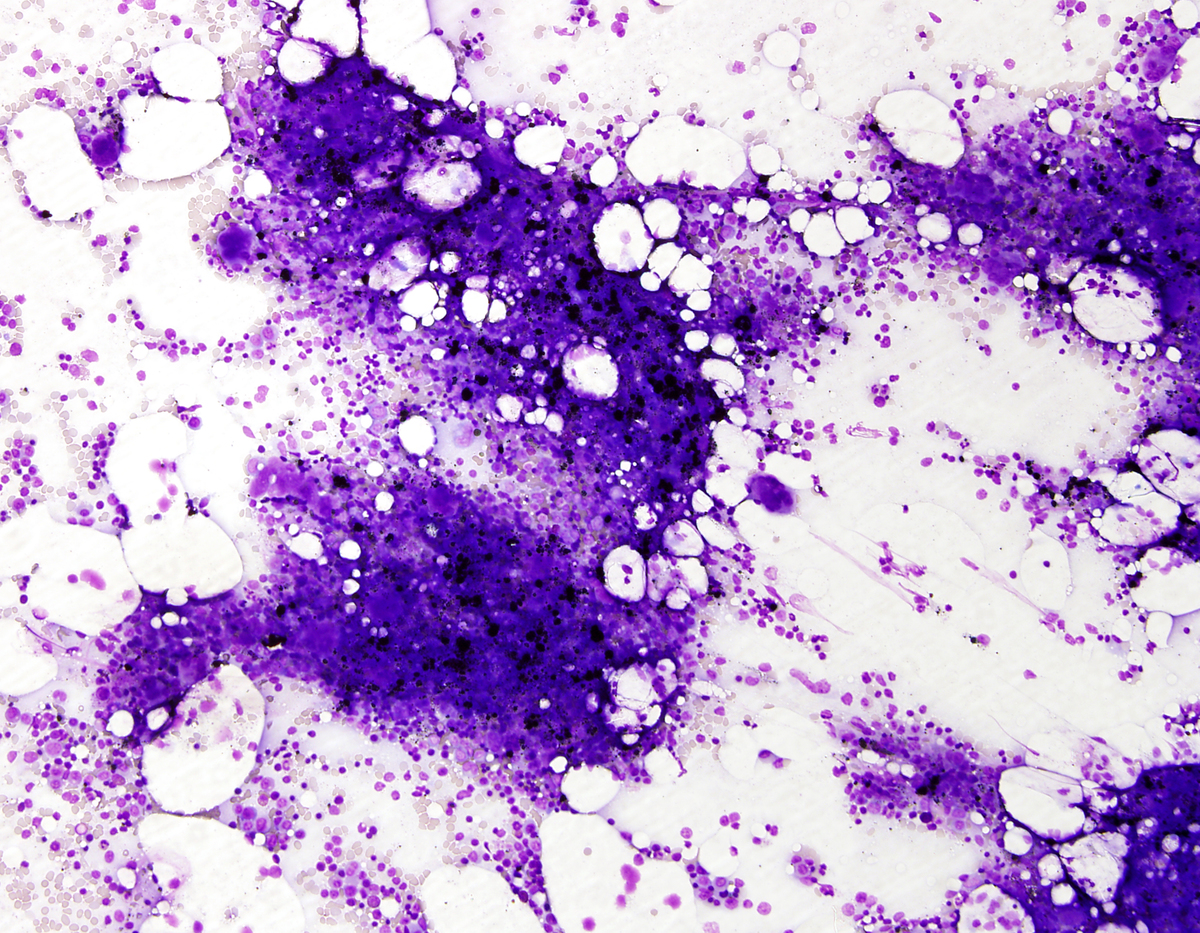 |
| Higher power, bone marrow aspirate showing megaloblastoid change of erythroid precursors, with some vacuolization of erythroid percursors | 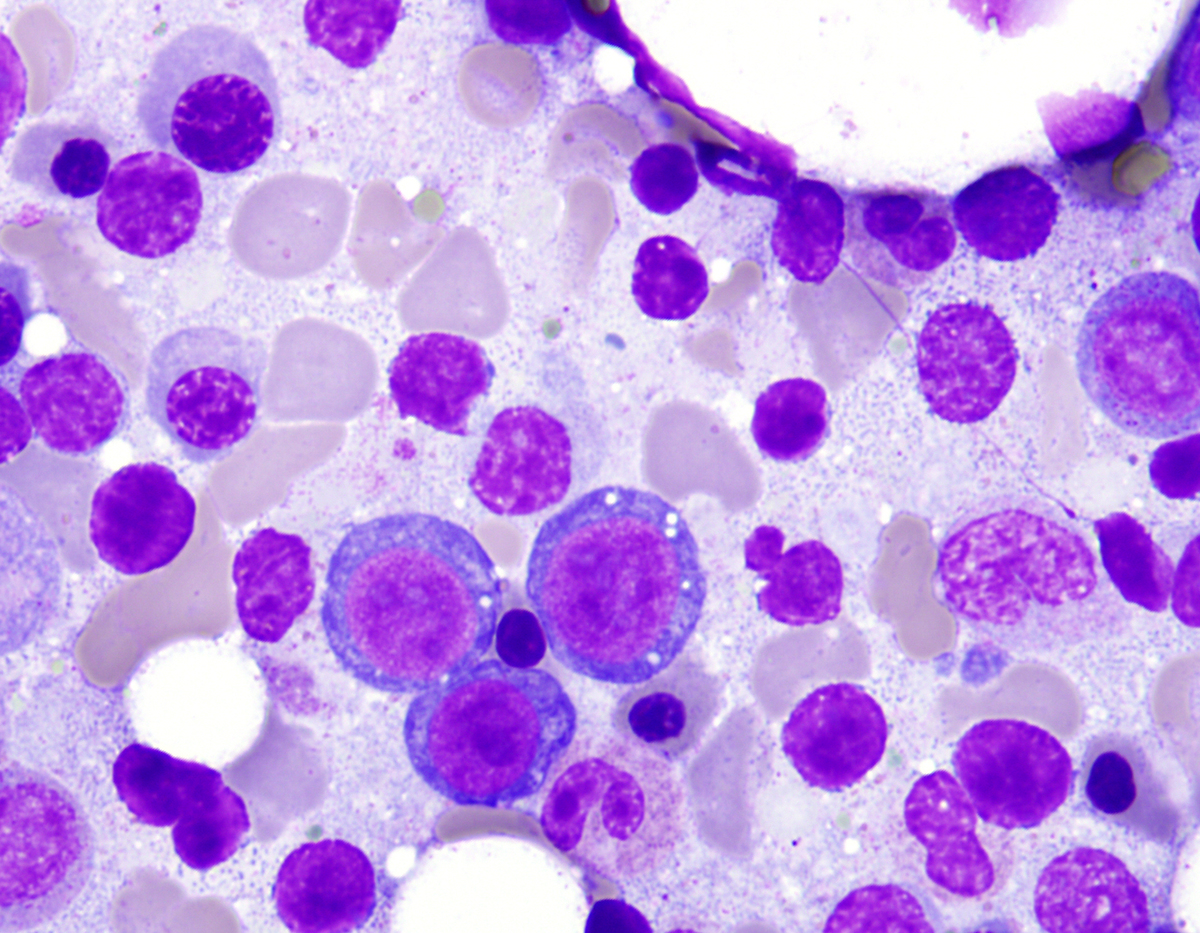 |
| Erythroid hyperplasia with megaloblastoid change and binucleation |  |
| Erythroid hyperplasia, megaloblastoid change |  |
| Prussian blue stain, ring sideroblasts | 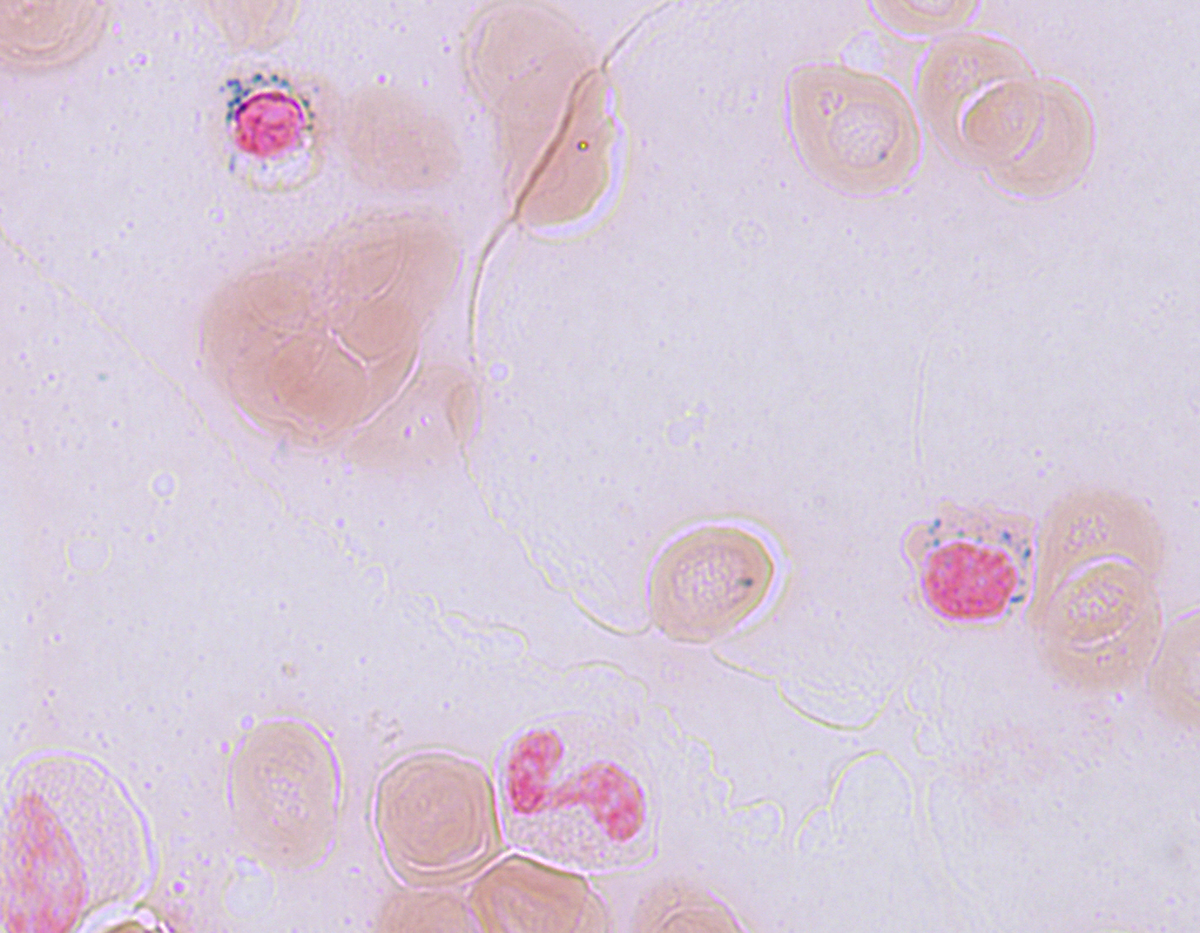 |
| Prussian blue stain, ring sideroblasts | 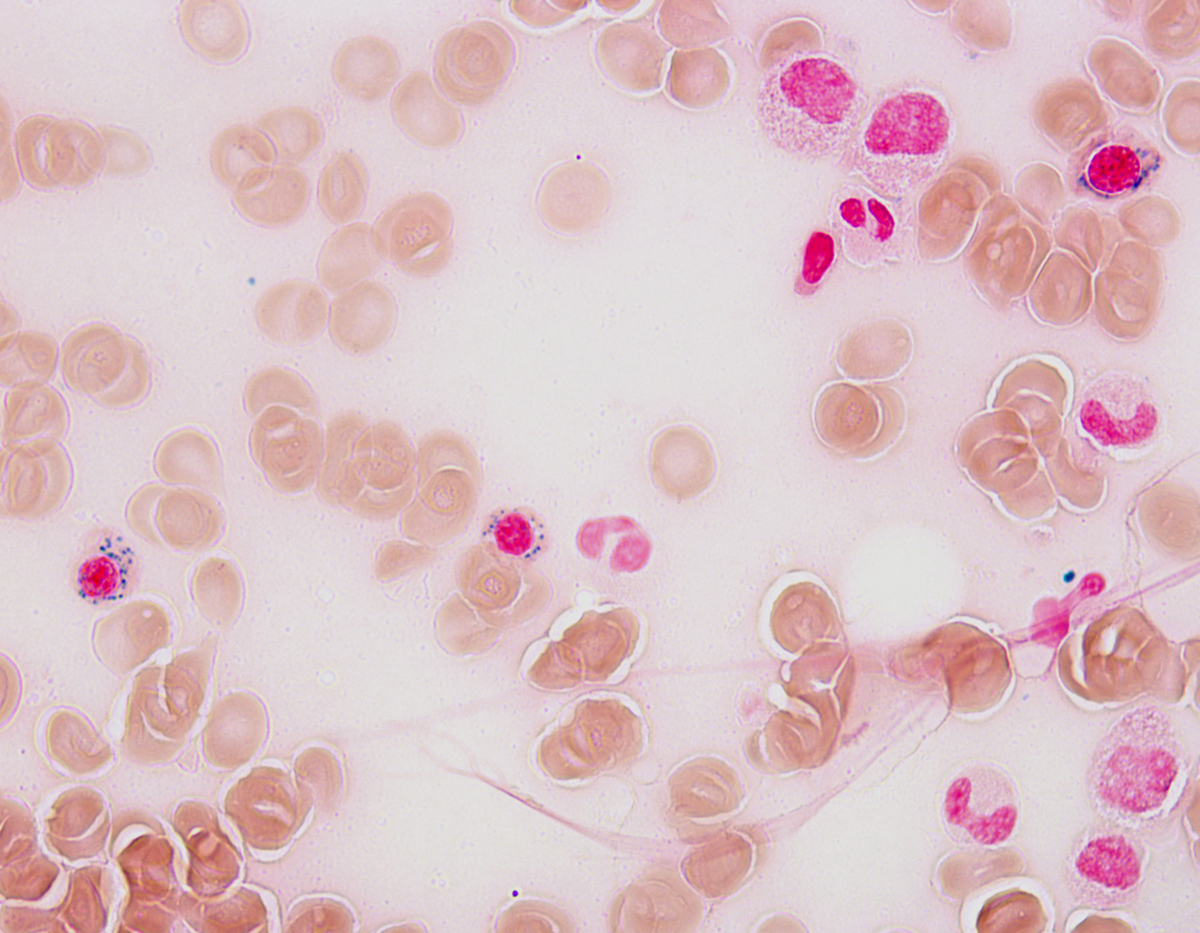 |
| Variable megakaryocytic dysplasia (multiple separate small nuclei) present in small numbers in diagnostic marrow, variable in subsequent marrows |  |