Institution: Wake Forest Baptist Health
Additional authors:Citabria Holley, MD, Mark Pettenati, PHD, David Grier, MD, Michael Beaty, MD
Session: AML with recurrent genetic abnormalities Part I
HISTORY
The patient is a 73-year-old female with a remote history of breast cancer in 1990s, status post mastectomy and chemotherapy. She presented with fatigue, weakness, weight loss, fever and night sweats. CBC showed leukocytopenia. A bone marrow biopsy showed 64% promyelocytes with numerous Auer rods. FISH for t(15;17) was done two times and both were negative for PML-RARA fusion. Real-time RT-PCR study, however, confirmed the presence of PML-RARA fusion transcript. A diagnosis of acute promyelocytic leukemia was made. Patient responded to chemotherapy with All-trans retinoic acid and Arsenic trioxide well. A bone marrow biopsy after 1 month of therapy showed no morphological evidence of APL. Real-time RT-PCR study, however, still showed residual PML-RARA fusion products. Patient is currently 2 months after the initial diagnosis and doing well.
DETAILS
The bone marrow core biopsy was B+ fixed, paraffin embedded, and stained with hematoxylin-eosin. Bone marrow aspirate smears were stained with Wright-Giemsa.
Bone marrow and peripheral blood, initial diagnosis: The peripheral blood smear showed pancytopenia. There was no circulating blasts or blasts equivalents. The bone marrow biopsy showed increased promyelocytes (64% by manual differential count) with numerous auer rods present. There was no background dysplasia.IMMUNOHISTOCHEMISTRY AND FLOW CYTOMETRY
Blast immunophenotype by flow cytometry: CD45+/CD13+/CD33+/CD38+/MPO+/HLA-DR-/CD34-/CD11b-/CD117-/CD15-/CD14-/CD56-/CD3-/CD19-
CYTOGENETIC FINDINGS
Karyotype at diagnosis showed additional chromosomal material on the short arm of chromosome 4 and on the long arm of chromosome 8, loss of chromosome 17, and gain of chromosome 22.
FISH study using the DNA probes specific for the APL 15;17 translocation (PML-15q22 and RARA-17q21) was performed and did not reveal PML/RARA fusion event.MOLECULAR FINDINGS
PML-RARA fusion quantification by real-time RT-PCR using primers specific for bcr1 and bcr3 PML-RARA fusions showed positive bcr3 fusion (bcr1=0.000, bcr3=0.476). After 1 month of therapy, bcr3 signal is significantly decreased but still present at 0.031.
INTERESTING FEATURES
FISH analysis is the standard method to confirm acute promyelocytic leukemia with t(15;17). Rare APL cases, however, are negative for FISH while positive in molecular analysis. Similar to FISH positive APL, these FISH negative APL are sensitive to ATRA and arsentic chemotherapy. Thus it is important to make a timely diagnosis of these FISH negative APL for treatment purpose. We recommended that if clinical presentation, bone marrow morphology and immunophenotype are indicting APL, a molecular study using PCR should be performed even when karyotype and FISH for t(15;17) are negative.
PROPOSED DIAGNOSIS
Acute promyelocytic leukemia with PML-RARA rearrangement, FISH negative.
CONSENSUS DIAGNOSIS
Acute promyelocytic leukemia with cryptic t(15;17)(q22;q21); PML-RARA
| Fig 1 |  |
| Fig 2 | 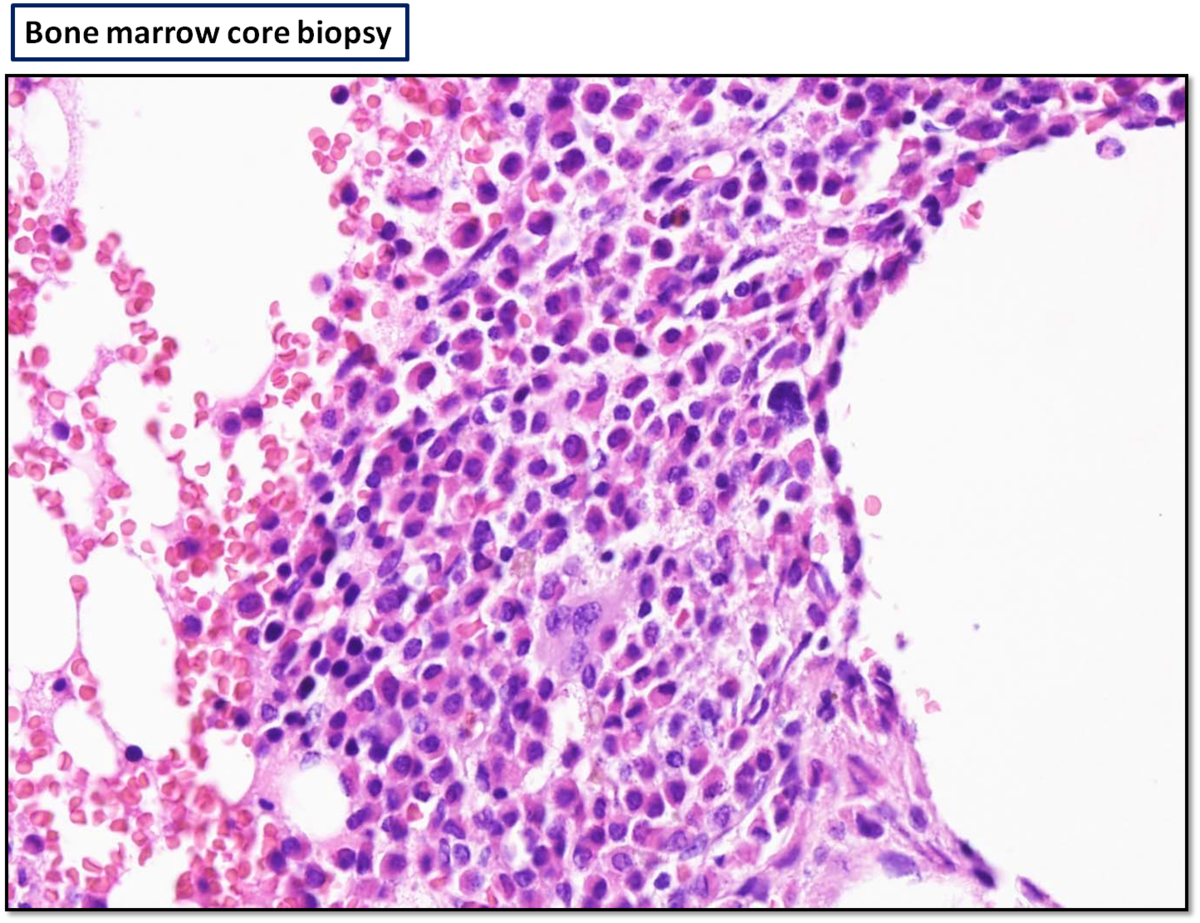 |
| Fig 3 |  |
| Fig 4 | 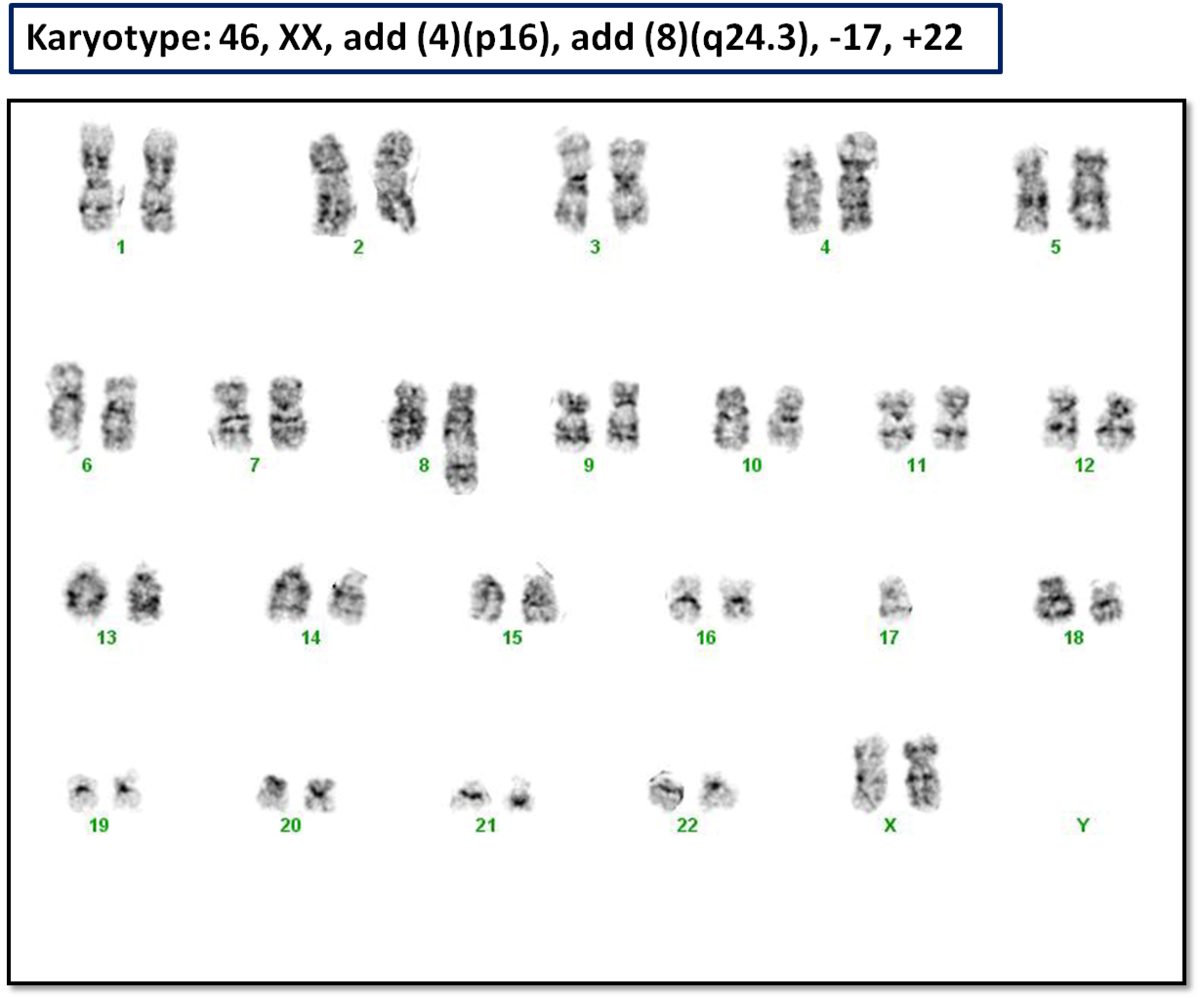 |
| Fig 5 |  |
| Fig 6 |  |