Institution: Massachusetts General Hospital
Additional authors:Elizabeth L. Courville Robert P. Hasserjian
Session: Erythroleukemia and megakaryoblastic AML and mimics
HISTORY
A 68-year-old man presented with fatigue and weight loss in the context of recently diagnosed CLL, which had not been treated with any cytotoxic therapy. Bone marrow biopsy revealed increased myeloid blasts in an erythroid dominant background, and a diagnosis of acute erythroleukemia, erythroid/myeloid type (FAB M6a) was made. Remission was achieved after induction with idarubicin and cytarabine. The patient relapsed with similar morphology 3 months later, and was treated with reinduction and reduced intensity stem cell transplant. One month post transplant, the patient presented with weakness and anorexia, and another bone marrow biopsy was performed.
DETAILS
B+ fixed bone marrow core biopsies from iliac crest and concurrent Wright-Giemsa stained bone marrow aspirates. Initial diagnostic marrow and second relapse. Initial marrow: Hypercellular, erythroid-dominant with erythroid left shift and prominent dysplasia. On the aspirate smear, there were 60% erythroid precursors and increased blasts. Some of the blasts (15% of nucleated cells) had cytoplasmic granules and small round nucleoli, consistent with myeloid blasts, while others were larger with deeply basophilic cytoplasm and prominent, elongated nucleoli, consistent with erythroid blasts. Second relapse: Hypercellular marrow with sheets of large blasts with prominent nucleoli. On the aspirate smear, the blasts had deeply basophilic cytoplasm with numerous small vacuoles. By immunohistochemistry, the blasts were positive for glycophorin C and CD117, and negative for CD34 and lysozyme, consistent with erythroid blasts.
IMMUNOHISTOCHEMISTRY AND FLOW CYTOMETRY
Flow cytometry: Initial diagnostic marrow: 7% myeloid blasts (CD33+, CD13+/-, CD117+, MPOdim+, CD14-, CD34-, CD4dim+, HLADR-). Immature erythroids had aberrantly dim CD71. Second relapse: 1% myeloid blasts (CD33+, CD13-, CD117+, MPO-, CD14-, CD34+).
CYTOGENETIC FINDINGS
Initial diagnostic marrow: 47-49,XY,del(6)(q2?3q26),add(8)(q24),der(16)t(1;16)(p12;p13),-19,-21,+3-5mar[cp13]/46,XY[7]
Second relapse: Karyotype could not be obtained due to lack of growth.
MOLECULAR FINDINGS
INTERESTING FEATURES
Acute erythroid leukemia is an uncommon subtype of AML, which has traditionally been subdivided into acute erythroleukemia (FAB M6a) and pure erythroid leukemia (FAB M6b). The initial presentation of this patient’s disease with a mixed population of myeloid and erythroid blasts illustrates the lineage plasticity of leukemia initiating cells that is a key feature of acute erythroleukemia. The relapse of the disease as pure erythroid leukemia underscores the concept that M6a and M6b often fall on a spectrum of disease with pure erythroid leukemia tending to represent a higher grade neoplasm. Interestingly, this patient’s erythroleukemia arose in a background of marrow involvement by CLL, which we observed in another recent case of pure erythroid leukemia at our institution (also submitted to this workshop).
PROPOSED DIAGNOSIS
Acute erythroleukemia (erythroid/myeloid subtype, FAB M6a) with evolution to pure erythroid leukemia (FAB M6b)
CONSENSUS DIAGNOSIS
Erythroid predominant myeloid neoplasm:
Acute erythroid leukemia, erythroid/myeloid type (WHO classification) versus refractory anemia with excess blasts-2, RAEB-2, with progression to pure erythroid leukemia
| Initial marrow erythroid dysplasia |  |
| Initial marrow granulated blast |  |
| Initial marrow erythroid blasts | 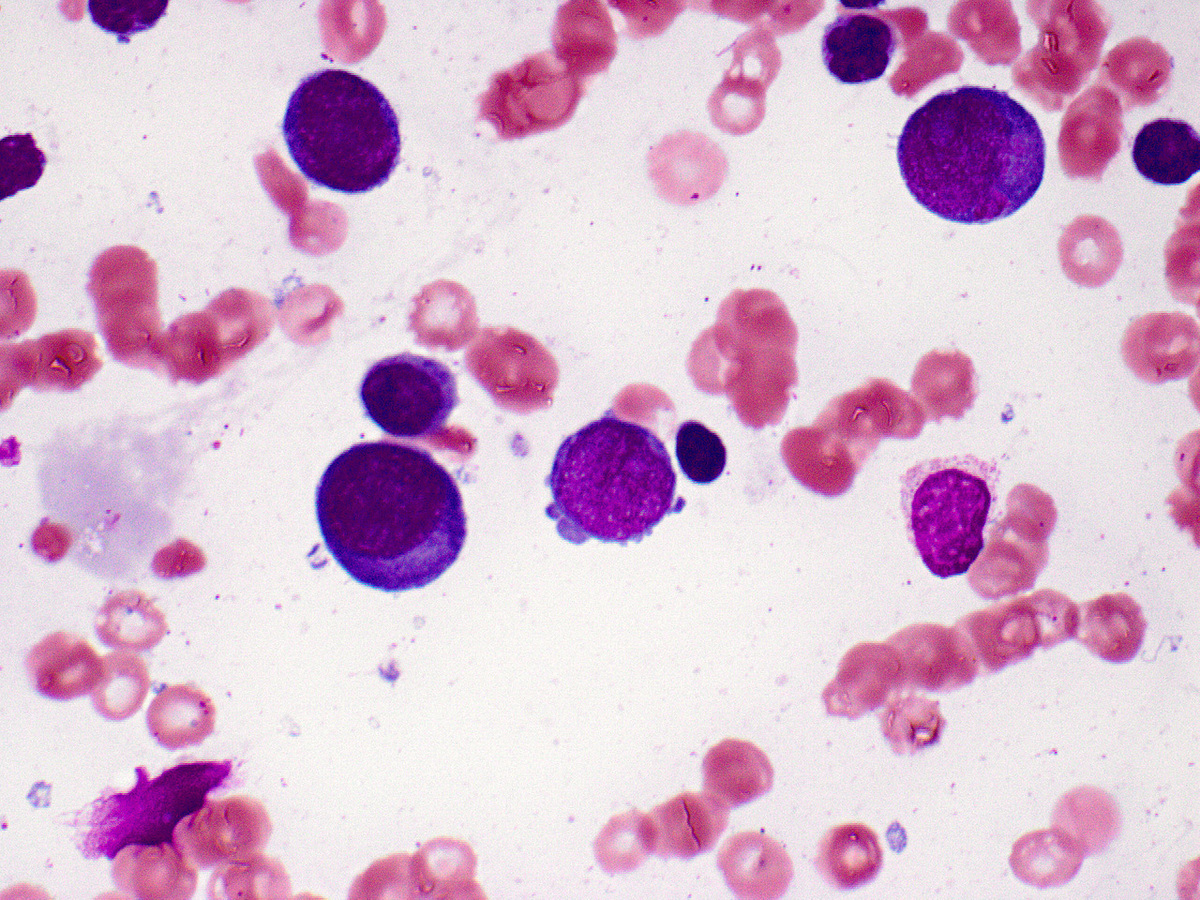 |
| Initial marrow core biopsy low magnification |  |
| Initial marrow core biopsy high magnification | 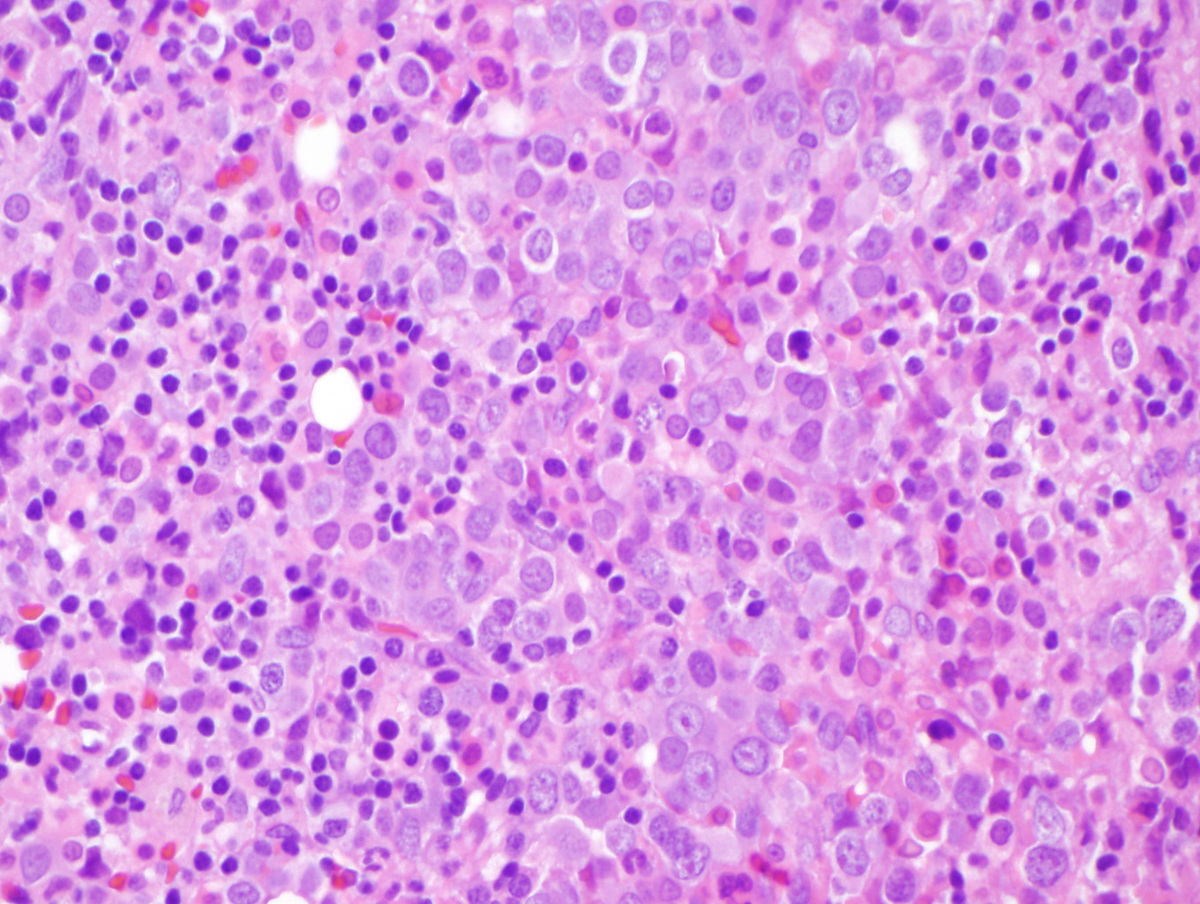 |
| Relapse core biopsy low magnification | 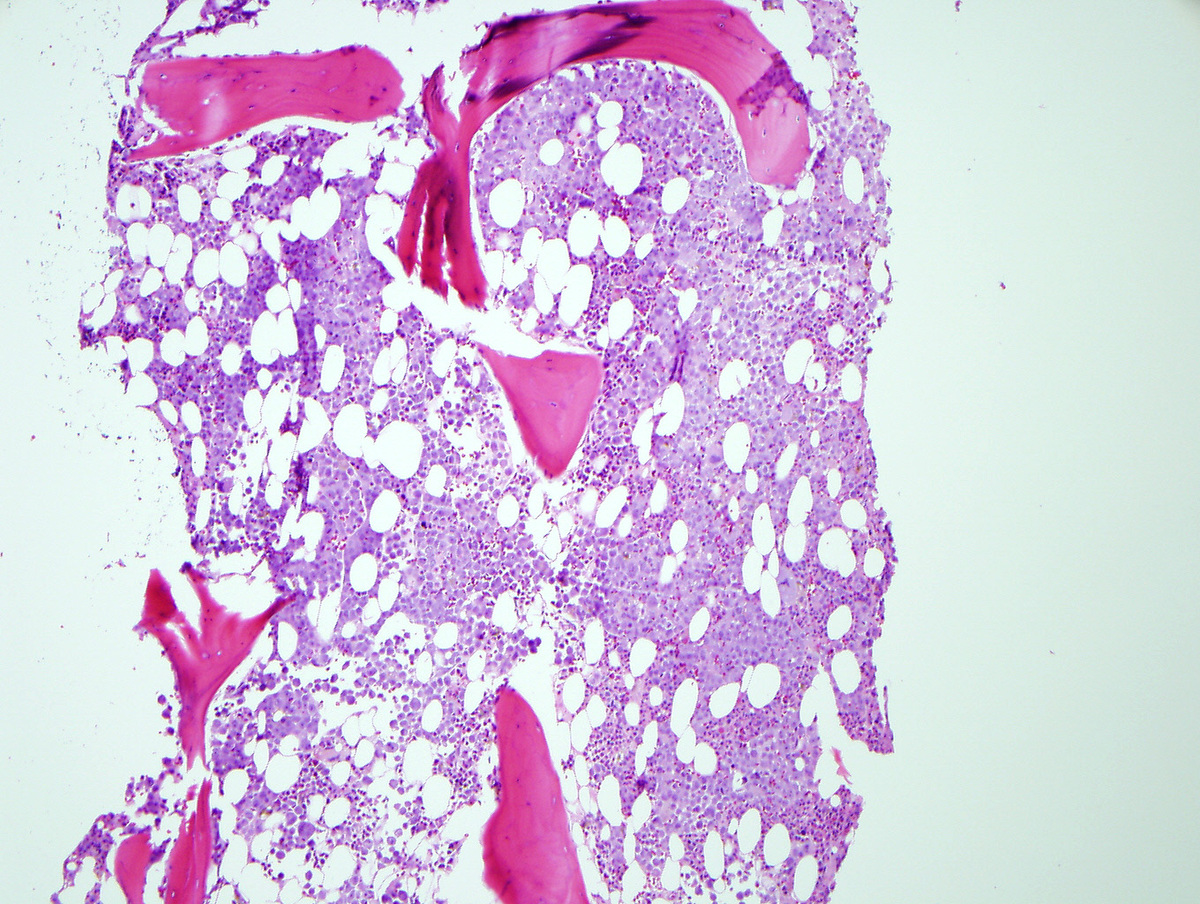 |
| Relapse core biopsy high magnification |  |
| Relapse CD34 IHC |  |
| Relapse CD117 IHC |  |
| Relapse glycophorin IHC | 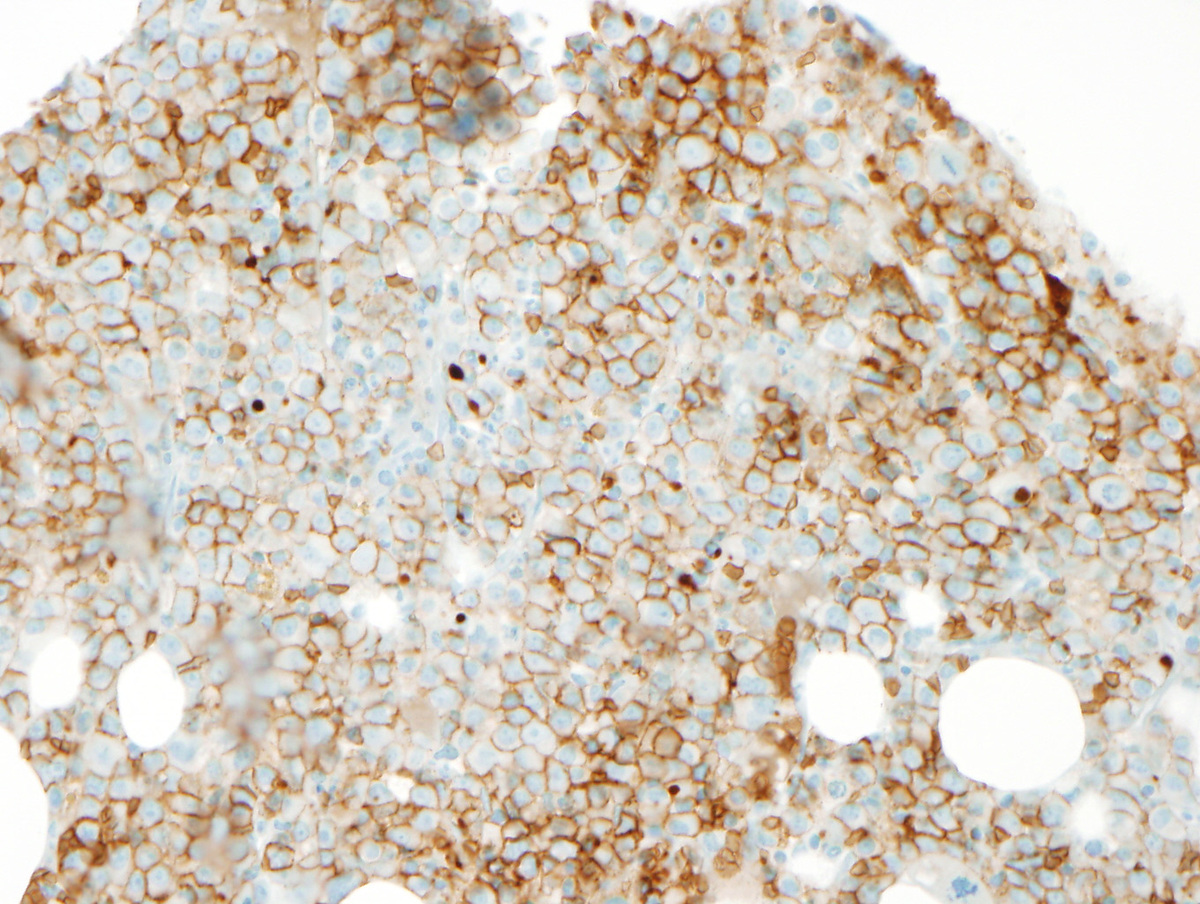 |
| Relapse lysozyme IHC | 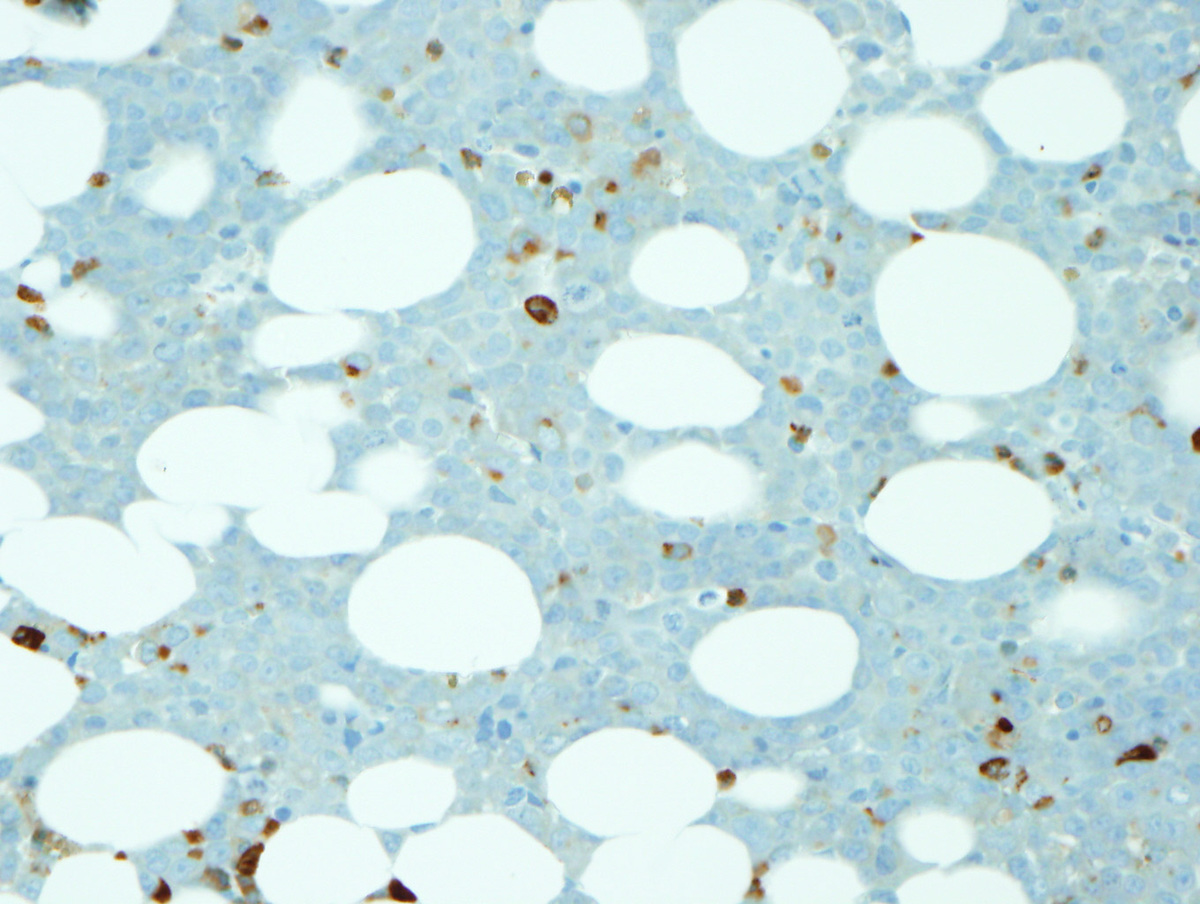 |
| Relapse erythroid blasts | 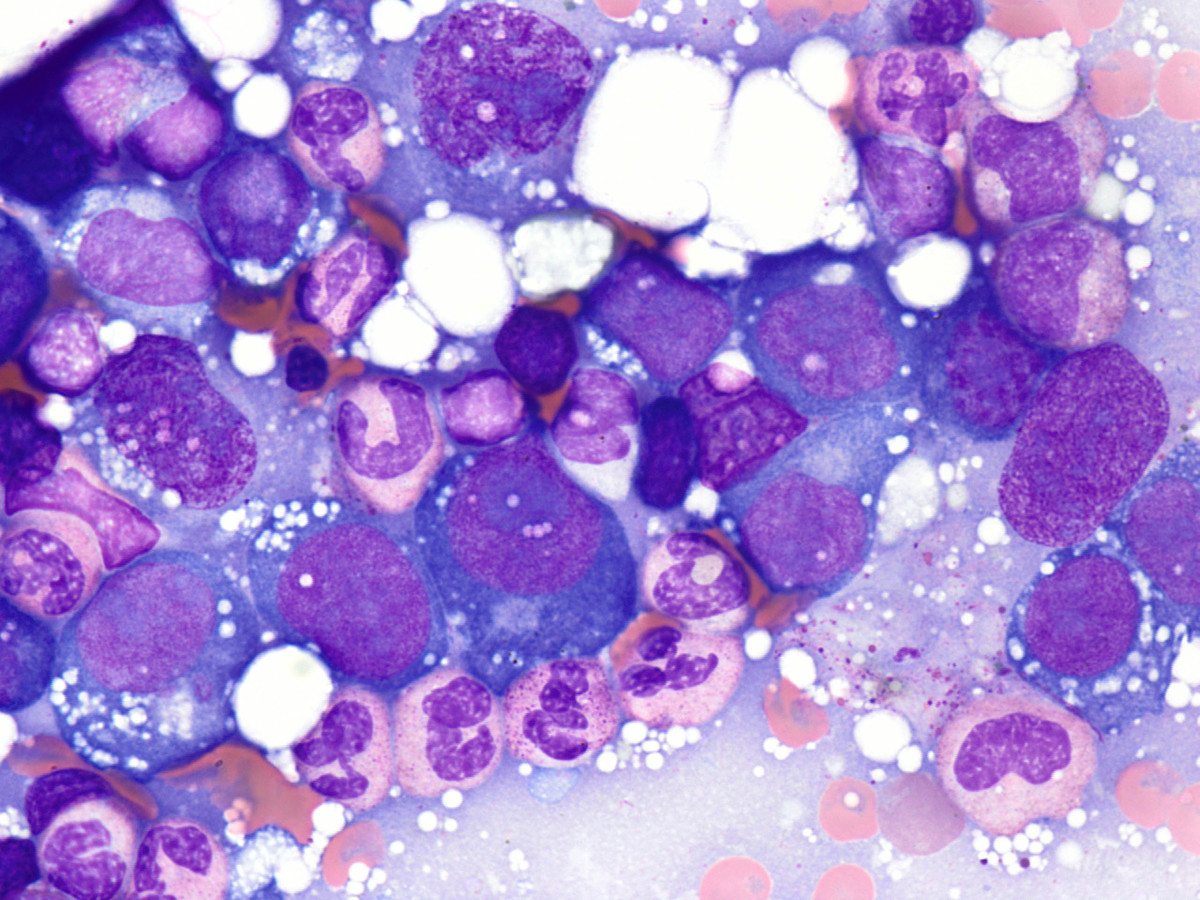 |