Institution: William Beaumont Hospital, OUWB School of Medicine, Troy, MI
Session: AML with myelodysplasia-related changes
HISTORY
In January 2009, a 69 year old male patient with pancytopenia underwent a bone marrow biopsy, and a diagnosis of refractory cytopenia with multilineage dysplasia was made. Both cytogenetics and MDS FISH panel were normal. The patient was treated accordingly. Subsequent 3 bone marrow biopsies from 2009 to 2011 show similar findings. In January 2012, although the histology showed similar findings as the previous bone marrow biopsies, cytogenetics reported an abnormal clone with 46 XY add(18). About 7 month later in August 2012, a second abnormal clone with 46 XY der (15) was found by cytogenetics and the concurrent bone marrow biopsy showed myelodysplasia and increased blasts, consistent with acute myeloid leukemia arising in a background of myelodysplasia. After treated with chemotherapy, the bone marrow in January 2013 still shows myelodysplasia and 5% blasts, with persistent abnormal cytogenetics.
DETAILS
Multiple bone marrow biopsies from 2009 to 2013. The bone marrow biopsy specimens are formalin fixed and paraffin embedded. Morphological findings of myelodysplasia are observed since 2009.
However, in August 2012, acute myeloid leukemia was diagnosed about 7 months after the first abnormal clone by cytogenetics, together with the second abnormal clone reported by cytogenetics. 20-25% blasts were counted including promonocytes.After chemotherapy, the blast count was back to 3%, however, morphological evidence of myelodysplasia persist, as did the abnormal cytogenetics.IMMUNOHISTOCHEMISTRY AND FLOW CYTOMETRY
Flow cytometry evaluations were within the normal limit from 2009 to 2011.
In August 2012, flow cytometry reported evidence of myelodysplasia and increased blasts (about 8%), indicative of disease progress. The diagnosis of AML was made based on combined morphological, flow cytometry and cytogenetic findings.In January 2013, after chemotherapy for AML, flow cytometry study reported evidence of myelodysplasia with 2-3% blasts.CYTOGENETIC FINDINGS
Normal cytogenetics since January 2009 to June 2011.
In January 2012, an abnormal cell line: 46, XY, add(18)(q23)[10]/46,XY[10] was reported, with no morphological evidence of acute myeloid leukemia.In August 2012, a second abnormal cell was described: 46,XY,der(15)t(1;15)(q10;q10)[15]/46,XY,add(18)(q23)[2]/46,XY[3], and the diagnosis of AML was made.In January 2013, after chemotherapy, abnormal cytogenetics persist with 2 abnormal cell lines: 46,XY,add(18)(q23)[15]/46,XY,der(15)t(1;15)(q10;q10)[3]/46,XY[2], and the morphological evaluation shows persistent myelodysplasia and 5% blasts.MOLECULAR FINDINGS
FISH panel studies performed on the bone marrow biopsy specimens from 2009 to 2013 have been normal.
Even during the acute myeloid leukemia when cytogenetic studies found 2 abnormal cell lines, the MDS FISH panel remained negative for abnormal findings.INTERESTING FEATURES
1. History of myelodysplasia with negative cytogenetics for 2 years with multiple bone marrow biopsies.
2. First abnormal cell line detected by cytogenetics indicates disease progress of myelodysplasia, but no morphological evidence of acute leukemia.3. 7 month later, a second abnormal cell line emerged, and the disease progressed into acute myeloid leukemia.4. MDS FISH panel studies have been normal/negative during the whole period of disease progress.5. After chemotherapy, partial morphological remission of AML was achieved, however, the same disease persists by cytogenetic study.PROPOSED DIAGNOSIS
1. Acute myeloid leukemia arising in a background of myelodysplasia
2. Persistent myelodysplasia, status post chemotherapyCONSENSUS DIAGNOSIS
1. Acute myeloid leukemia with myelodysplasia-related changes
2. Persistent myelodysplasia, status post chemotherapy| Acute myeloid leukemia arising in background of myelodysplasia | 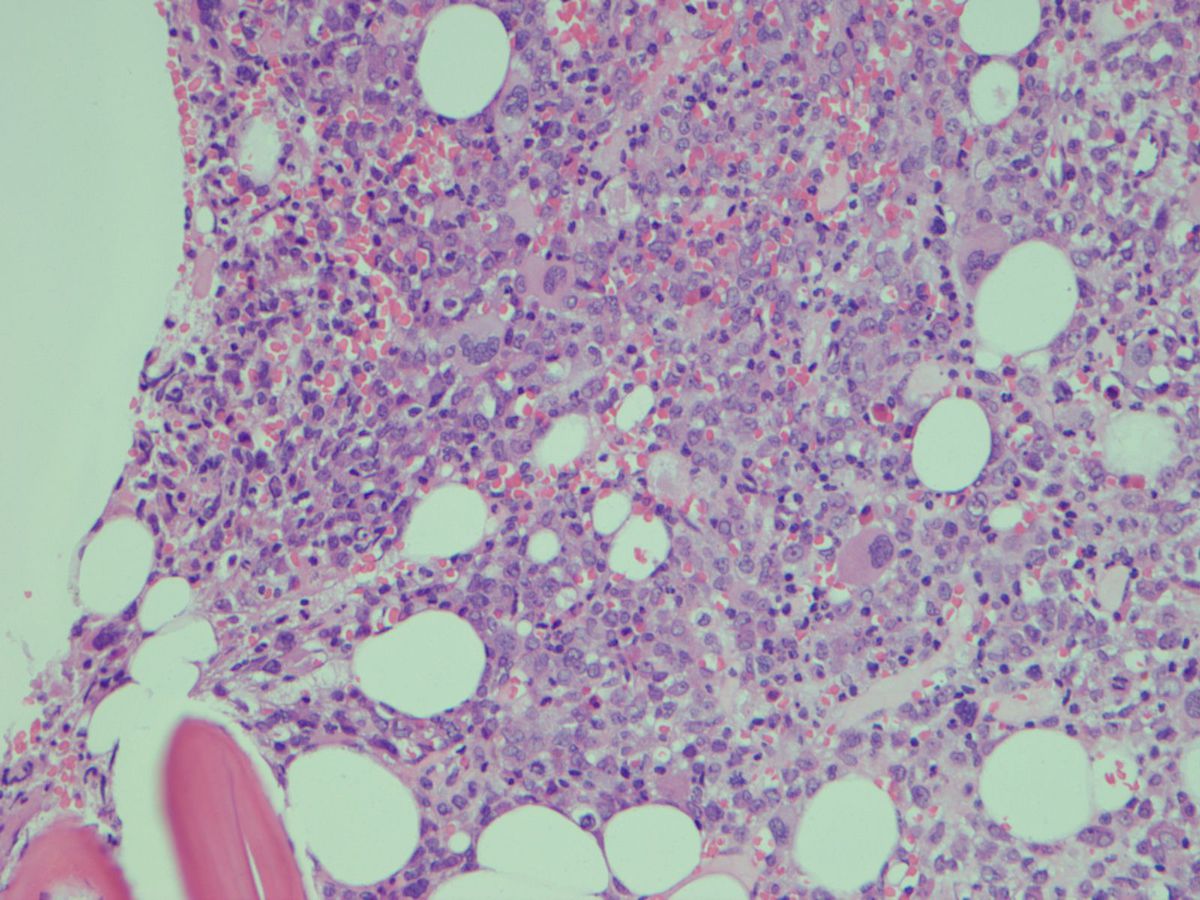 |
| Acute myeloid leukemia arising in background of myelodysplasia (aspirate) |  |
| Persistent myelodysplasia after treatment | 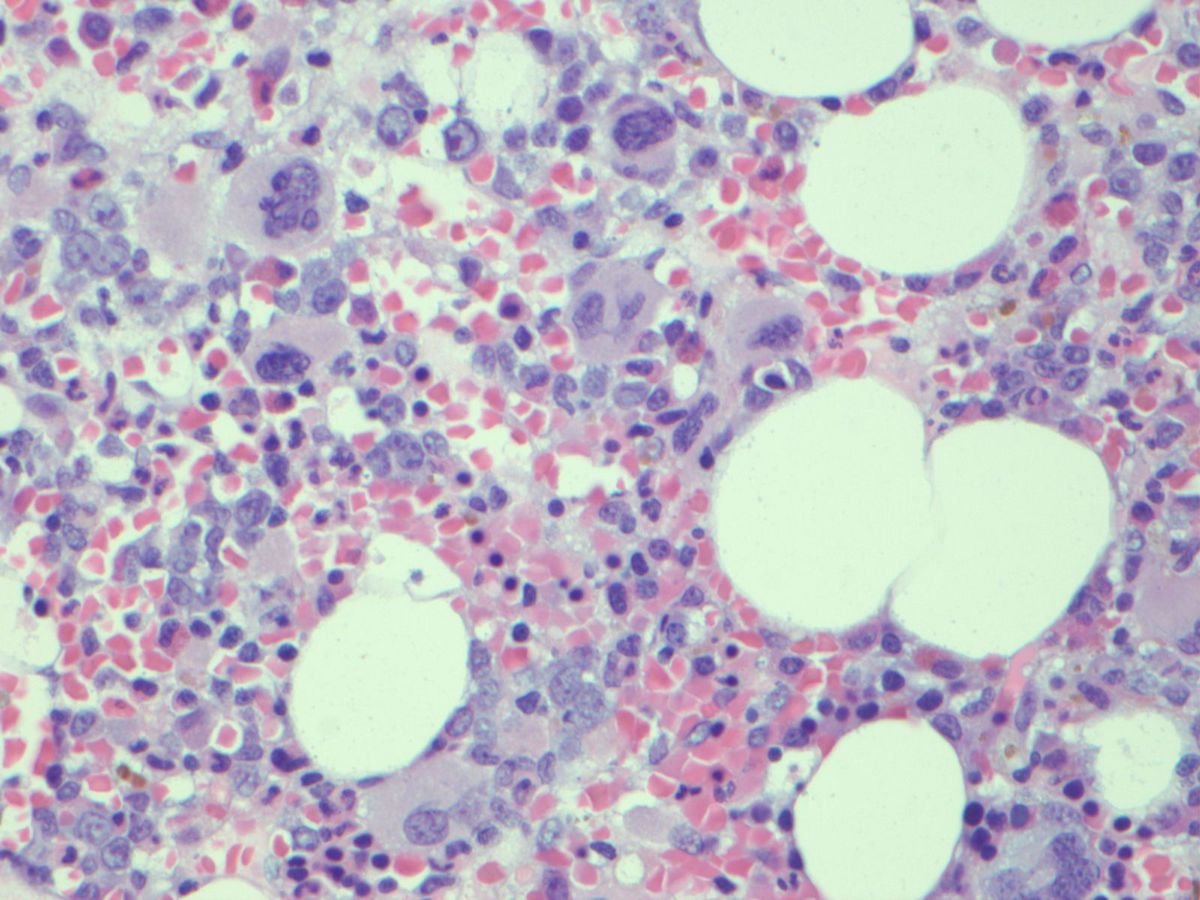 |
| Persistent myelodysplasia after treatment (aspirate) |  |
| Persistent myelodysplasia after treatment (aspirate 2) |  |