Institution: Penn State Hershey Medical Center
Additional authors:Jozef Malysz, M.D., Rhett P. Ketterling, M.D.
Session: AML with recurrent genetic abnormalities Part I
HISTORY
This 65 y.o. woman presents with nausea and fever. GI and infectious workup are non-contributory. A CBC shows: WBC 37.9 K/uL, Hgb 9.4 g/dl, HCT 29.4%, RBC 3.09 M/uL, MCV 97.0 fl, MCH 31.0 pg, MCHC 32.0 g/dl, RDW 17.3%, PLT 64 K/uL. WBC differential: 75% blasts, monoblasts and promonocytes, 0.5% promyelocytes, 0.5% neutrophilic meylocytes, 0% neutrophilic metamyelocytes, 9.5% band and segmented neutrophils, 0.5% Monocytes, 1% eosinophils, 7% basophils and 6%lymphocytes.
DETAILS
Peripheral smear: WBC’s: Numerous blasts with large round to folded nuclei, fine chromatin, prominent nucleoli, and variably abundant blue grey cytoplasm, occasional pseudopods, no vacuoles, rare or no granules and no Auer rods. Monocytes are markedly left-shifted mostly monobasts and promonocytes and only rare mature monocytes. Few myeloid intermediates (“leukemic hiatus”). Neutrophils have hypogranular cytoplasm and aberrant nuclear segmentation. Basophils are markedly increased. RBC’s: Moderate anisopoikilocytosis, few macroovalocytes, NRBC’s, coarse and fine basophilic stippling. PLT’s: Small to medium size with variable granularity. Bone marrow (AZF-fixed, RDO decal): Hypercellular 80%. Differential: 56% blasts, monoblasts and promonocytes, 1% promyelocytes, 0% neutrophilic meylocytes, 1% neutrophilic metamyelocytes, 1% band and segmented neutrophils, 2% eosinophils, 6% basophils, 2% mature monocytes, 26% erythroblasts, 5% lymphocytes. Megakaryocyte number is decreased with normal morphology. Myeloid lineage is markedly left-shifted with mostly blasts and immature monocytes, decreased and dysplastic neutrophilic maturation, increased basophils. Erythroid lineage has marked dyserythropoiesis.
IMMUNOHISTOCHEMISTRY AND FLOW CYTOMETRY
Flow: Increased and abnormal myeloblasts expressing: CD45 (moderate), CD33 (moderate), CD13 (bright), CD117 (heterogenous), CD34 (bright), HLA-DR (moderate), CD11c (partial, dim), CD71 (partial, dim), with aberrant expression of CD56 (heterogenous). There is no expression of cMPO, cCD3, CD19, CD22, cCD79a . Immature and maturing monocytes and basophils are increased. Maturing granulocytes are decreased.
CYTOGENETIC FINDINGS
Chromosome analysis: 45,XX,inv(3)(q21q26.2),del(5)(q13q33),der(7;16)(q10;p10)[20] Interphase FISH: probes for DEK and NUP214 normal, no fusion.
MOLECULAR FINDINGS
None.
INTERESTING FEATURES
1) The morphology is misleading for the ultimate cytogenetic classification of this disease: “It didn’t read The Book.” The monocytic and basophilic differentiation with prominent dysplasia of myelopoiesis and erythropoiesis, but not so much in megakaryopoisesis is characteristic of AML with t(6;9)(p23;q34); DEK-NUP214. However, this case turned out to have inv(3) and no DEK-NUP214 by karyotype or FISH. By the WHO 2008 classification, AML with inv(3) “may have morphologic and cytochemical features of any FAB subtype of AML other than acute promyelocytic leukaemia with acute myeloid leukemia without maturation, acute myelomonocytic leukaemia and acute megkaryoblastic leukemia morphologies most common.” Normal or elevated platelet counts with giant and/or hypogranular platelets associated with increased, small mononuclear or bilobed nuclei or otherwise dysplastic megakaryocytes are described. None of these “typical” morphological features of inv(3) AML are present in this case.
2) Poor prognosis. This patient’s leukemia was primarily refractory to standard induction chemotherapy. She was subsequently offered low intensity therapy and is alive with disease 3 months after diagnosis.
PROPOSED DIAGNOSIS
AML with inv(3)(q32q26.2); RPN1-EVI1
CONSENSUS DIAGNOSIS
Acute myeloid leukemia with inv(3)(q32q26.2); RPN1-EVI1
| Peripheral smear: Blasts with moncytic differentiation, basophils and dysplastic neutrophilic metamyelocyte | 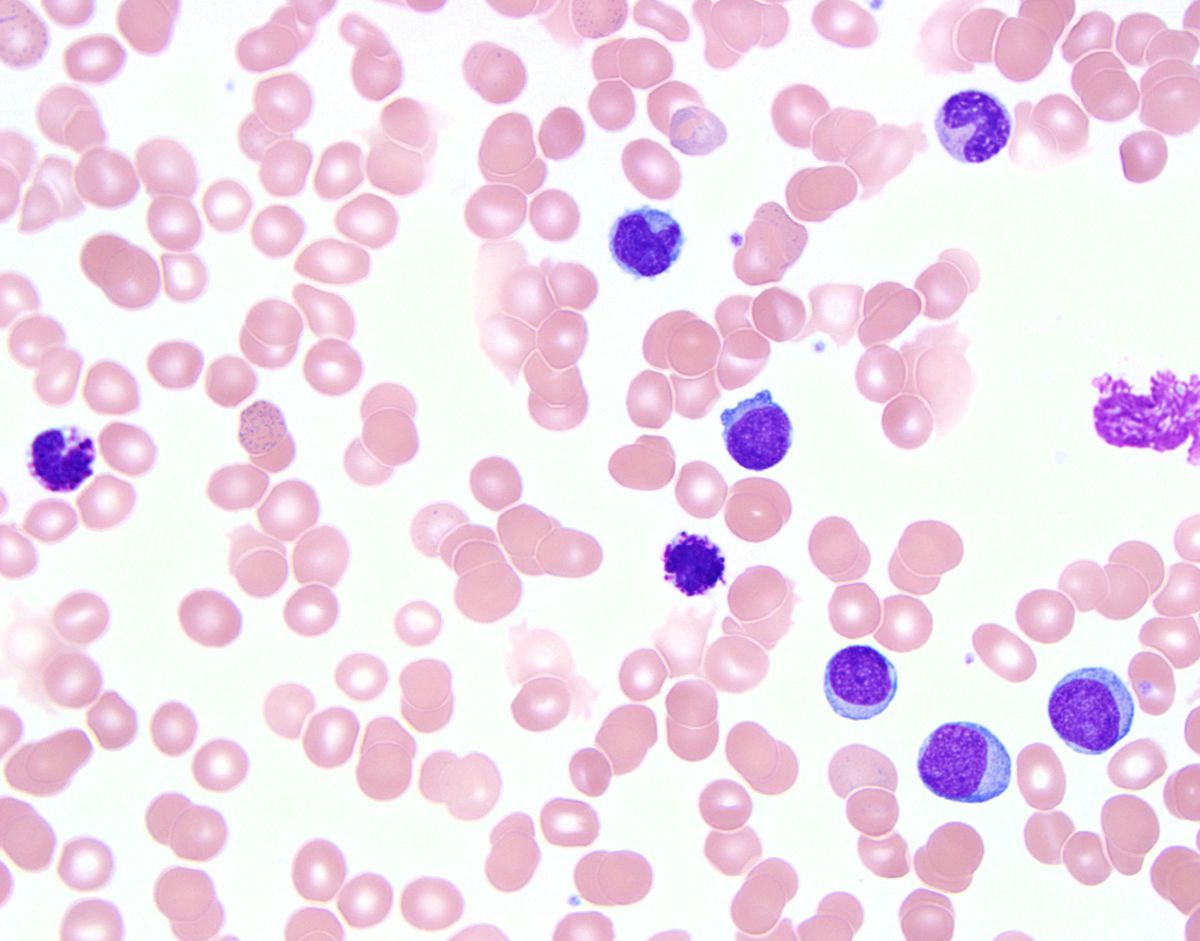 |
| Peripheral smear: Blast with monocytic differentiation. | 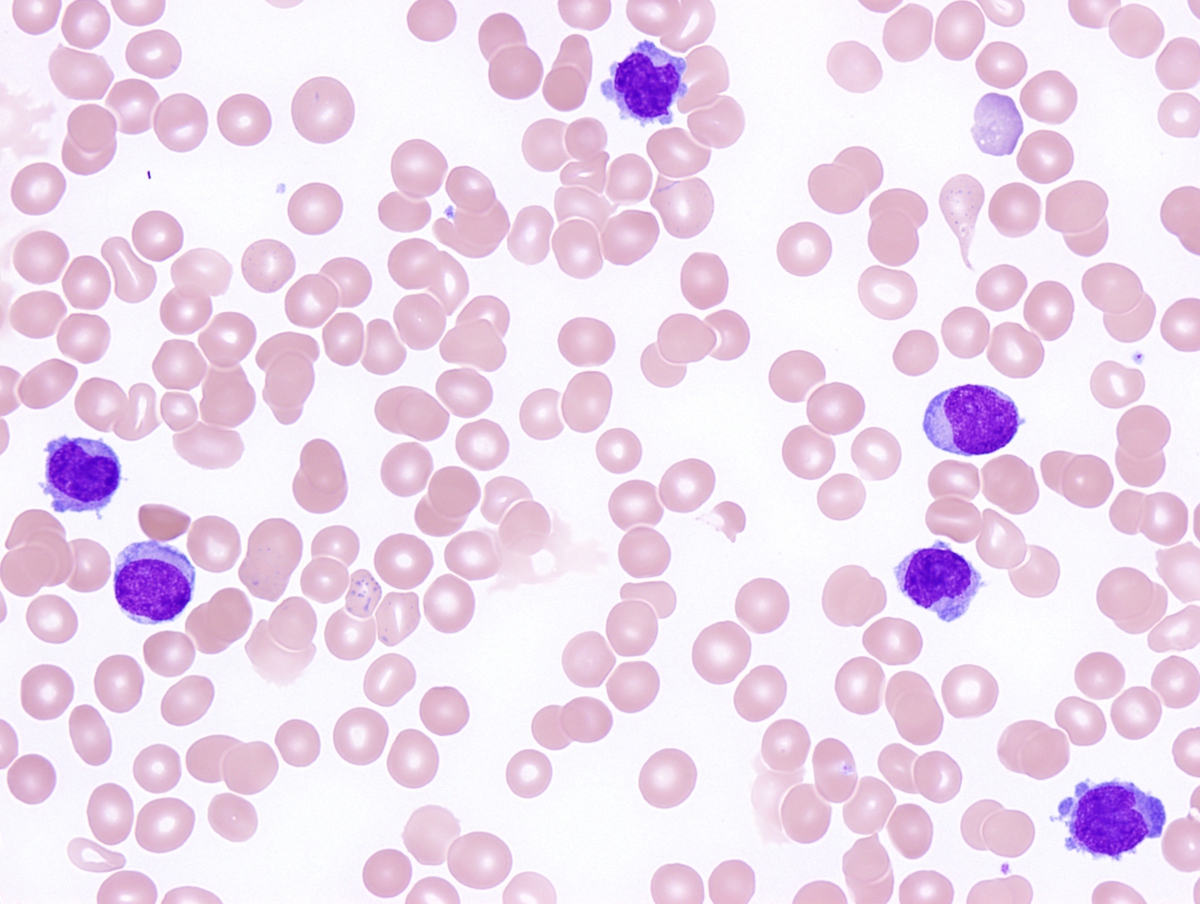 |
| Peripheral smear: Blasts and dysplastic neutrophils. | 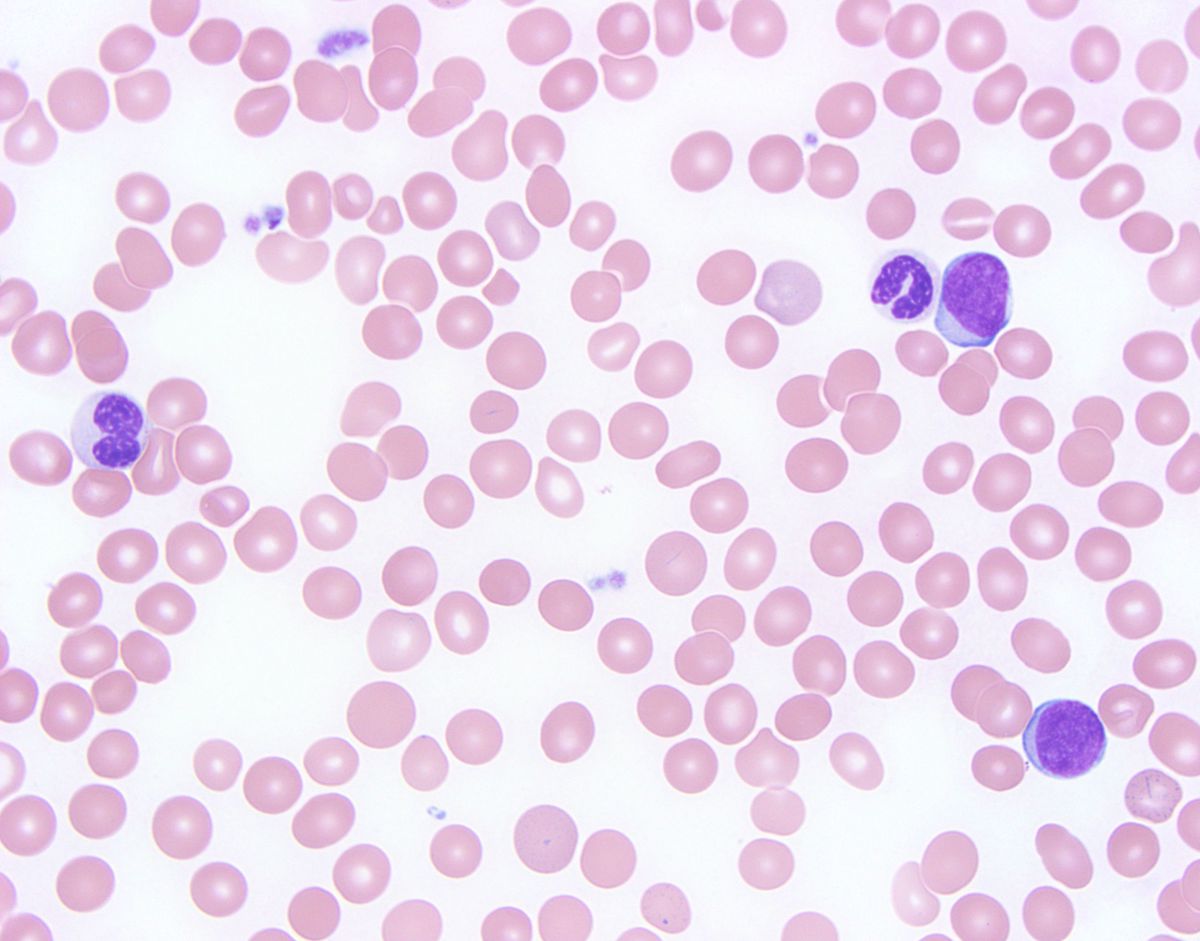 |
| Bone marrow aspirate: AML with moncytic differentiation, basophils and dyserythroipoiesis | 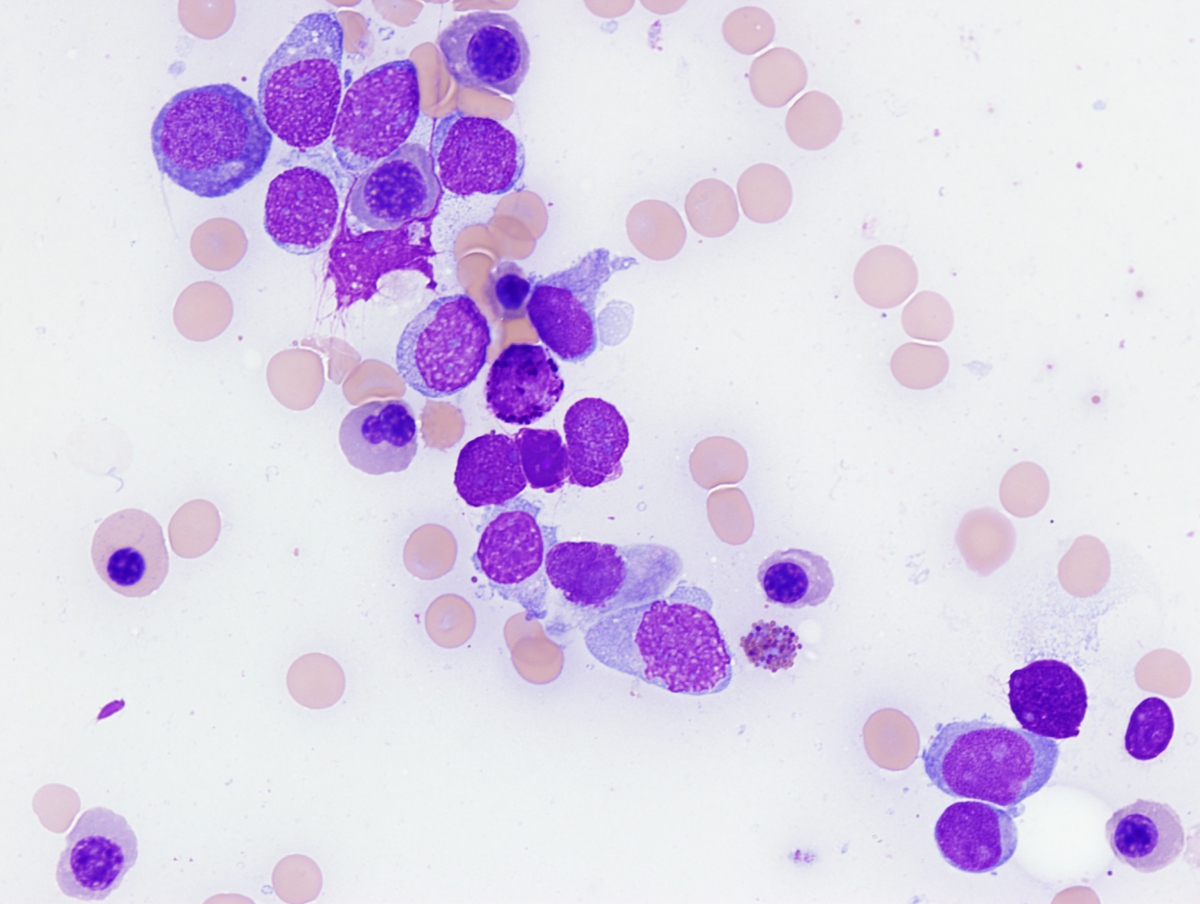 |